
Blood Pressure Monitor
Why Regular Blood Pressure Monitoring Is Important :
Monitoring blood pressure is an important part of maintaining good health. A blood pressure monitor is a useful medical device that allows individuals to measure their blood pressure at home, in hospitals, and in healthcare facilities.
Regular monitoring can help people and healthcare professionals understand blood pressure patterns and make informed healthcare decisions.
What Is a Blood Pressure Monitor?
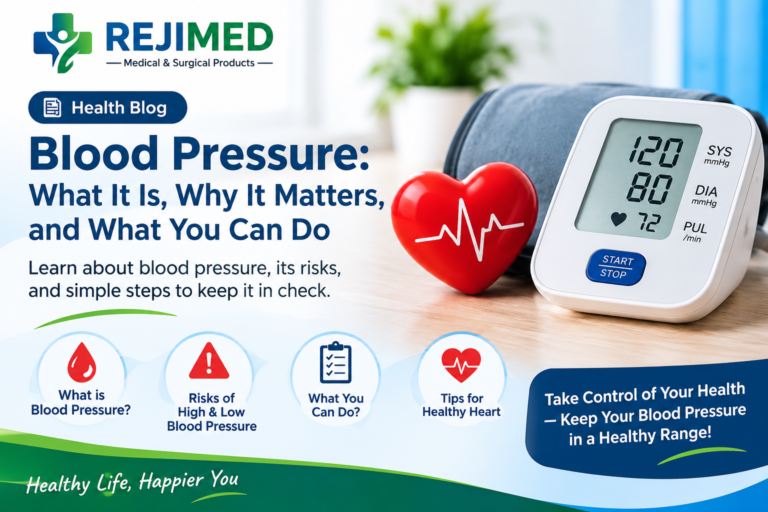
A blood pressure monitor is a medical device used to measure the pressure of blood against the walls of the arteries.
Most digital blood pressure monitors display two important readings:
- Systolic Pressure: The pressure in the arteries when the heart beats.
- Diastolic Pressure: The pressure in the arteries when the heart rests between beats.
Blood pressure readings are usually expressed in millimeters of mercury (mmHg).
Types of Blood Pressure Monitors
There are several types of blood pressure monitors available:
1. Digital Upper Arm Blood Pressure Monitor
This monitor uses an inflatable cuff placed around the upper arm. It automatically measures and displays blood pressure readings.
2. Digital Wrist Blood Pressure Monitor
This device measures blood pressure using a cuff placed around the wrist. Correct positioning at heart level is especially important for accurate readings.
3. Manual Blood Pressure Monitor
Manual monitors are commonly used by trained healthcare professionals and typically require a stethoscope and proper measurement technique.
Benefits of Using a Blood Pressure Monitor
- Helps monitor blood pressure regularly at home.
- Provides useful information for healthcare consultations.
- Helps identify changes in blood pressure readings over time.
- Supports ongoing blood pressure management.
- Convenient for personal and professional healthcare settings.
How to Measure Blood Pressure Correctly
Follow these basic steps when using a digital blood pressure monitor:
- Avoid caffeine, smoking, and exercise for at least 30 minutes before measuring.
- Sit quietly and rest for at least five minutes.
- Keep your back supported and feet flat on the floor.
- Place the cuff on your bare upper arm, following the manufacturer’s instructions.
- Keep your arm supported at heart level.
- Start the monitor and remain still during measurement.
- Take two readings about one minute apart and record the results.
For consistent monitoring, measure at approximately the same time each day when advised by your healthcare professional.
Who Should Use a Blood Pressure Monitor?
A blood pressure monitor can be useful for:
- People who need regular blood pressure monitoring.
- Individuals with hypertension.
- Older adults.
- People monitoring their cardiovascular health.
- Patients following a healthcare professional’s monitoring recommendations.
Important Tips for Accurate Readings
Use the correct cuff size, follow the manufacturer’s instructions, and avoid talking during measurement. Keep a record of your readings and share them with your healthcare professional.
A single reading does not provide a complete picture of your blood pressure. Do not change medication based on home readings without professional medical advice.
Find Medical Equipment at Rejimed
Rejimed aims to make essential medical equipment and healthcare supplies accessible to customers across Bangladesh. Explore our product collection to find medical devices suitable for your healthcare needs.
Conclusion
A blood pressure monitor is a valuable tool for regular blood pressure monitoring. When used correctly, it helps individuals keep track of their readings and share useful information with healthcare professionals.